

 Search


With the holidays approaching, maybe it’s time to rethink that kitchen drawer full of random, dull, gift-set knives.
Any chef—whether you’re working a bustling catering line at Culinary Crafts or preparing a holiday feast for your family—needs the right equipment to do the job safely and efficiently. And no piece of kitchen equipment is more important for a chef than the knives you use.
So let’s talk about what knives you really do, and don’t, need.
Does the quality of your knives really matter?
Yes. A lot. Not only does a high-quality knife make your kitchen tasks go much quicker and easier, but they’re safer as well. A quality blade retains a sharp edge, which means that you won’t have to work as hard or apply as much pressure. That means you’re less likely to have a kitchen mishap.
Admittedly, top-quality knives can be expensive, and there comes a point where spending more money on knives won’t necessarily get you a better cooking experience. So let’s take an honest look at what knives you do, and don’t, really need for your kitchen.
What knives should you own?
If you visit a cutlery shop or start perusing options online, you’ll be quickly overwhelmed with options. It’s much better to have 3-5 great quality knives that will see a lot of use, versus an 18-piece block set of mediocre knives that mostly just take up space.
We recommend making your initial investment on the following key knives. If you can afford to invest in all five knives at once, excellent! If you can’t, start with the first three listed here and add the others later, maybe one Christmas at a time.
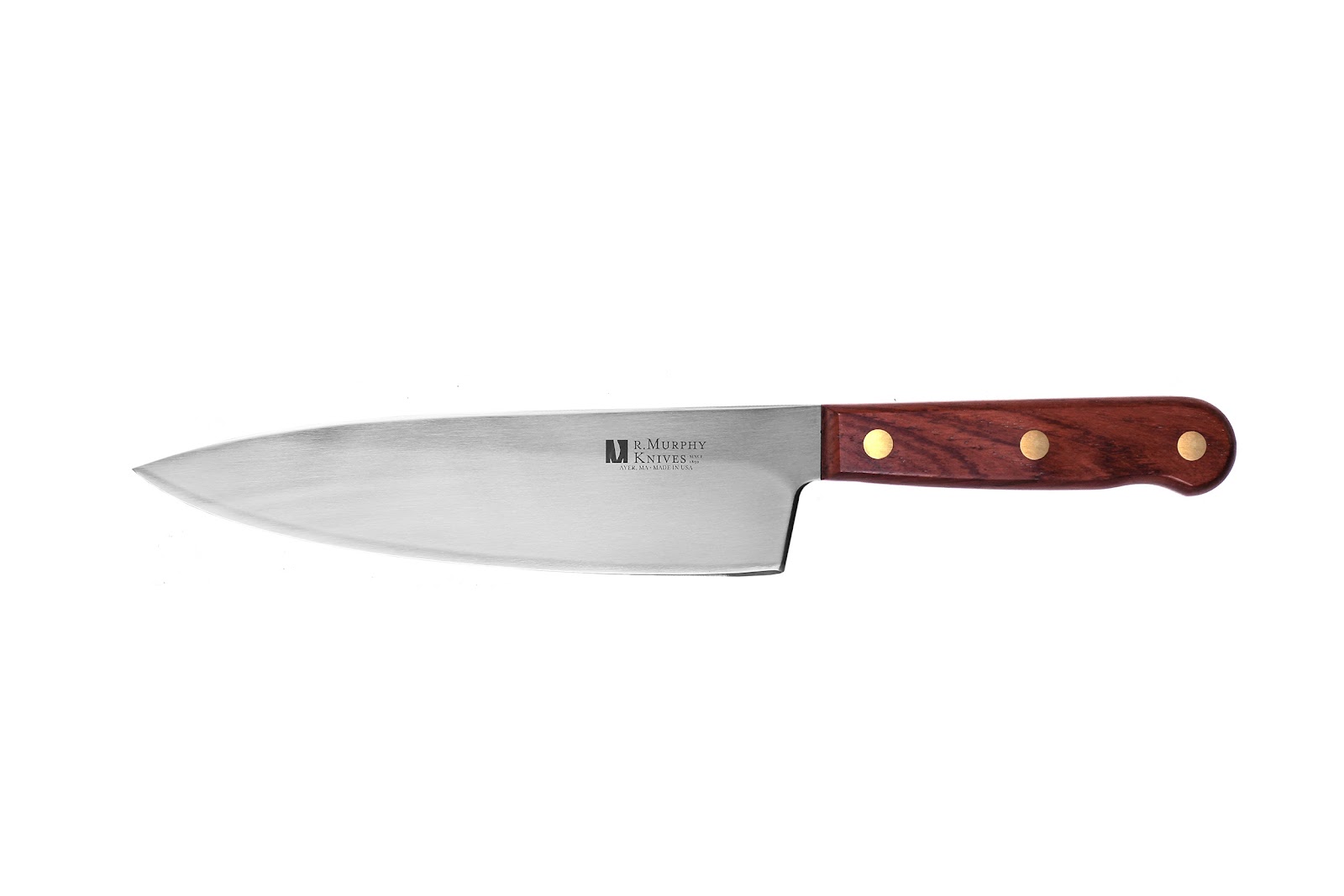
Chef’s Knife. aka Cook’s Knife. This is the most commonly used knife in the kitchen. Its wide, symmetrical blade that tapers to a point is ideal for an array of chores including chopping, slicing, dicing, and mincing. Sizes range from 6”-14” but we find that 8” or 10” are most popular and easiest to use.
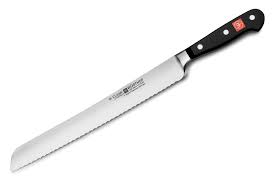
Serrated Bread Knife. Straight or slightly curved blade, often with a single-sided edge. Some bread knives are offset, which helps avoid knuckles hitting the counter or cutting board. Not limited to bread, these knives are also great for slicing fruits with a hard rind. Sizes typically range from 6” – 12” and we prefer them 9” or more.
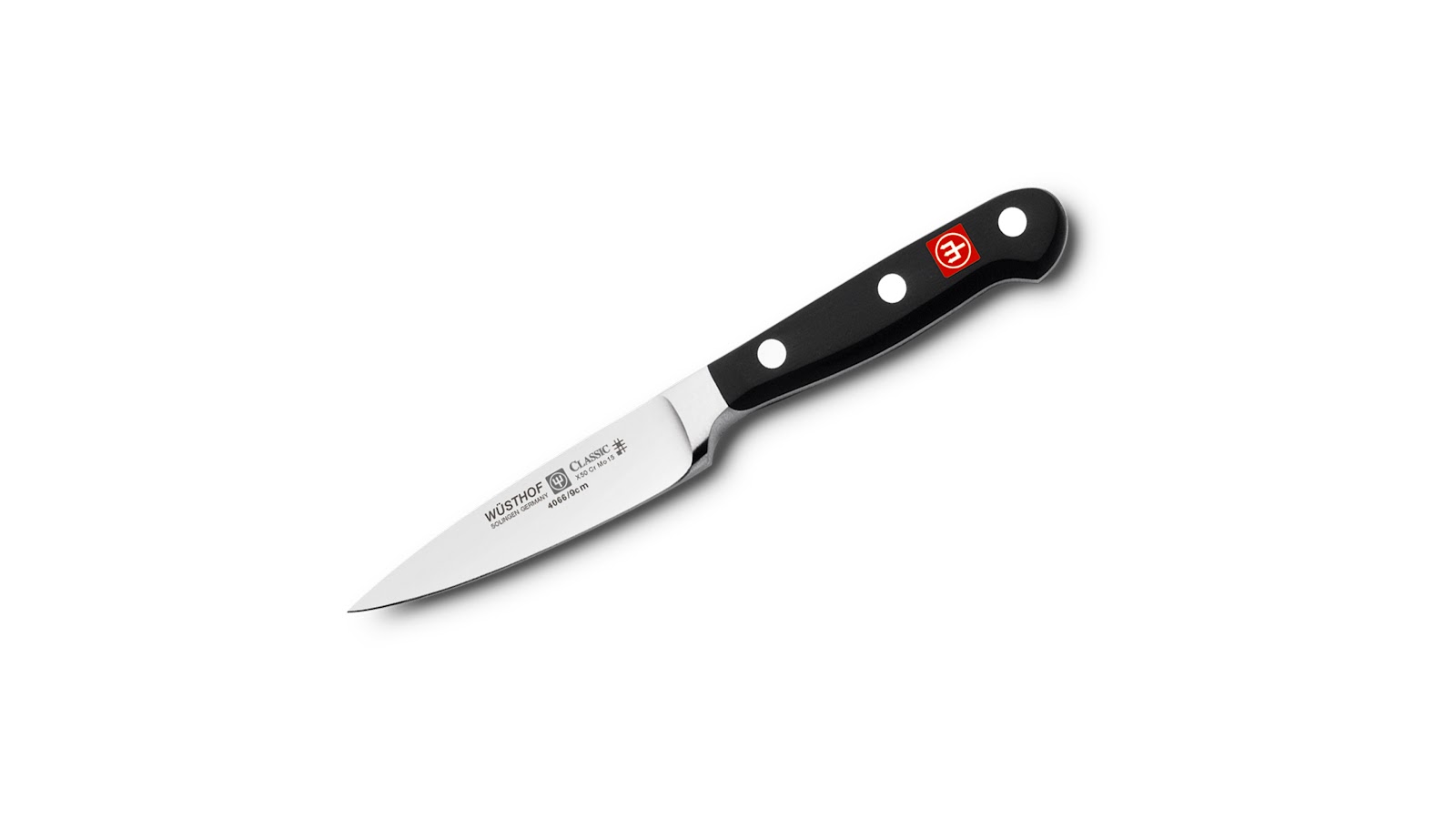
Paring Knife. Probably second only to the Chef’s Knife in versatility and frequency of use, a paring knife is perfect for peeling, julienning, garnishing, and other tasks that require delicate precision. For your first and go-to paring knife, opt for a spear point or sheep’s foot style. Put off buying a bird’s beak / tourne style until later… or never. Sizes will vary, but we prefer 3″-4”.
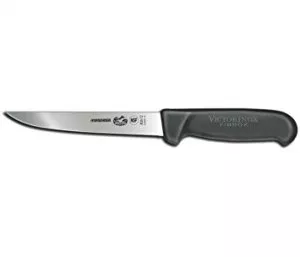
Utility Knife. Found with both straight and scalloped edges, utility knives could be considered filling the gaps and overlapping the uses between your chef’s knife, paring knife, and slicing knife. These are excellent for slicing soft fruits and vegetables, trimming proteins, halving strawberries, and other larger jobs that feel awkward with a paring knife. Sizes typically range from 5”-8”, with 6” being very common and our recommendation.
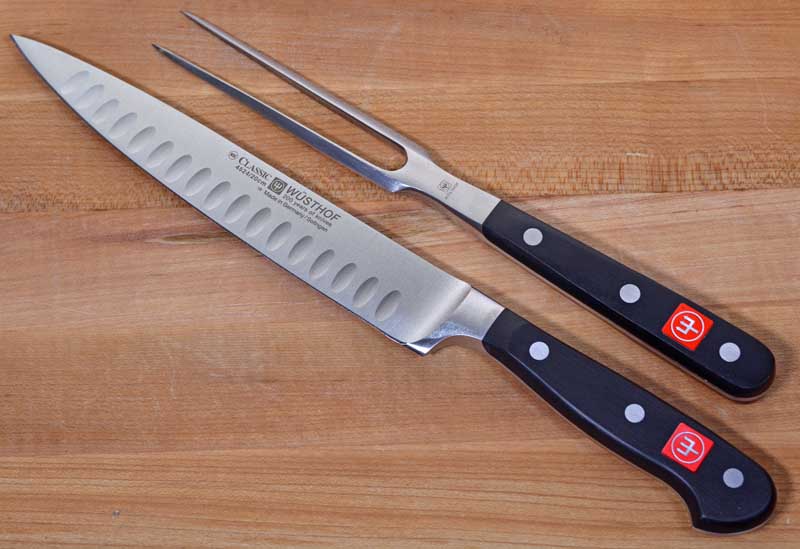
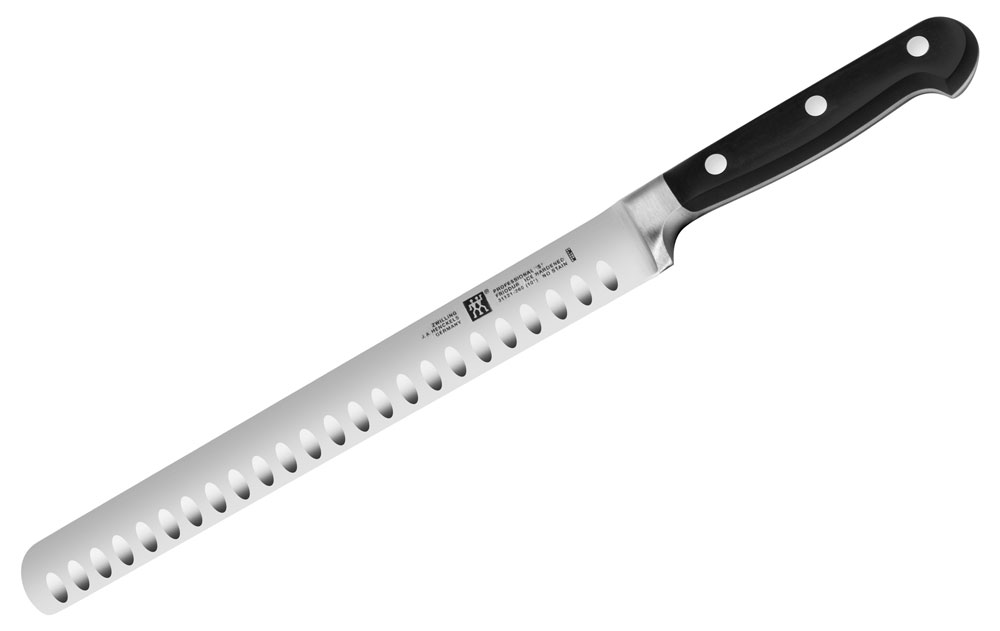
Carving / Slicing Knife. While perhaps not used as much as the other core knives listed above, when you have a large whole muscle meat (roasts, whole poultry, hams, etc.) to serve, these are invaluable. Blades are typically straight edged and relatively thin. Granton edges (hollow ground sections along the side of blade to create space and reduce drag) are common and popular on carving knives. Sizes vary and shorter lengths (9” – 12”) often have pointed tips while longer lengths (14”+) often have rounded tips.
Other useful knives.
For many cooks, especially home cooks, the five knives already listed will suffice for nearly all applications. That said, there are lots of other styles out there that can be helpful (or just fun to collect). Options include:
Boning Knife. Just like it sounds – ideally suited for removing meat from bone, skin, and other tissues. Boning knives are generally either classified as flexible (great for staying close to bones and getting into odd-shaped areas) or stiff (great for making straight cuts and jointing).
Santuko, Nikiri, Gyoto, and other Japanese style knives. Increasingly popular in Western kitchens, these knives are often alternatives to the traditional Chef’s Knife or Utility Knife. Typically, these are single-edged and ground to a narrower angle than European-style knives. The narrow angle is sharper and slices better with more precision but requires more maintenance. Unique blade styles offer different ergonomics and functions which many chefs prefer for certain tasks, especially very thin slicing and chopping.
Cleaver. Not common in home kitchens, since these are thick and heavy knives designed to chop through thick meat and bone when butchering. Also great for opening lobster shells and other similar tasks.
Cimeter. Similar to a scimitar sword, this is a staple knife for professional butchers, but not commonly used in home kitchens.
What to consider when buying knives.
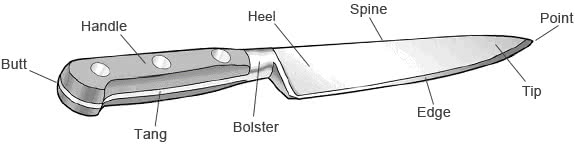
Knife Anatomy
Stamped vs forged construction?
Stamped knives are made by cutting the knife shape out of a flat sheet of metal (like a cookie cutter). Forged knives are made by hammering heated bar metal into the knife shape. Once the basic shape is formed, both types of knives will be ground and honed to create the cutting edge. Stamped knives are typically thinner, lighter, lacking a bolster, and are generally less expensive. Forged knives are thicker, heavier, stronger, well balanced, and are usually more expensive to purchase. For most long-lasting knives, we prefer forged construction. That said, for some knives (a long Granton edge meat slicer or a heavily used and often replaced butcher cimeter), we opt for stamped.
Type of steel?
Nearly all high-quality knives are made from some type of high carbon stainless steel designed to strike a balance between hardness and durability, ease of sharpening and honing, resisting stain and decay, and cost. German steel (often 420 or 440 C stainless) is common for European-style knives. It’s excellent at resisting corrosion, and very easy to sharpen. German steel is durable and holds an edge well, though not as well as some harder steels. Japanese steel (often VG-10 or San Mai) is common in Asian-style knives and is increasingly seen in European styles as well. This layered laminated steel is exceptionally hard, which offers excellent sharpness and edge retention. They can be more difficult to sharpen well and sometimes offer slightly less corrosion resistance compared to the German steel. As noted earlier, these steels are all striking a balance between different factors. The best steel for you depends on your personal preferences and priorities.
Handles?
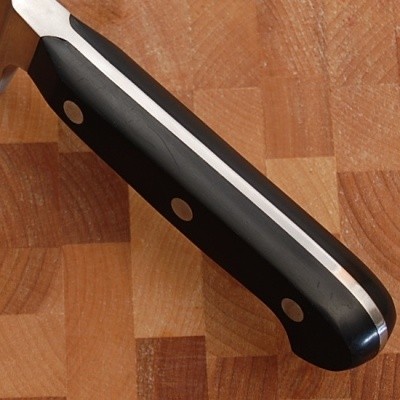
Wood handles are not only very comfortable, we think they’re the prettiest options. They can also last longer than the blade of the knife, but they require more maintenance than other options. Stainless handles are popular for the seamless styling and the ease of maintenance. The notable drawback is that many stainless handles can become slippery when wet, though many steel knives have textured stainless handles to mitigate this. Synthetic resin and Polyoxyethylene (POM) handles are very common on riveted full tang knives. They’re very durable, easy to clean, and although simple, very nice looking. Plastic, nylon, and rubber handles are popular in commercial kitchens because they are affordable, easy to clean, and fairly durable. We don’t find them nearly as attractive as other options though, and many home chefs want something with more aesthetic appeal.

Edge type?
Straight edge (aka flat ground) is the most common and applicable. Granton edge (see the note on carving knives above) reduce drag and are very nice in certain situations. Serrated edges (aka scalloped) have small “teeth” which help to penetrate a tough exterior without pressure that might harm a soft inside. Hollow ground edges are concave to create a very thin and narrow cutting edge. They are very sharp and wonderful for delicate tasks but not recommended for heavy duty chores.
Edge angle?
European style knives usually have a 20 degree angle which is great for edge retention and durability. Asian style knives usually have a 15 degree angle (sometimes even narrower) which is excellent for sharp precision slicing.

Full Tang design?
Full tang refers to the entire knife being a single piece of metal end to end. The core of the handle is simply an extension of the blade. This can easily be seen on knives where the core of the handle is the same metal as the blade and the handle material is double or triple riveted to the metal. In general, we prefer full tang knives because they are sturdier, longer lasting, and more reliable. If you’ve ever had a partial tang knife break apart at the handle during use, you know how frustrating and dangerous it can be. Heavy full tang construction is particularly important for knives that see a lot of heavy use and cutting. For lightweight knives that will be used primarily for delicate tasks, this is less crucial.
<
Caring for your knives.
When you invest in excellent knives, it becomes all the more important to take care of them properly.
- Always hand-wash your knives with warm soapy water after use, rinse well, and thoroughly dry immediately. Machine washing, extended air drying, or leaving knives dirty for long can damage your knives.
- Hone your knives regularly, practically with every use.
- Keep your knives sharpened. Frequency of sharpening will depend on the steel, type of use, and frequency of use. See our separate post about knife sharpening for more info and tips.
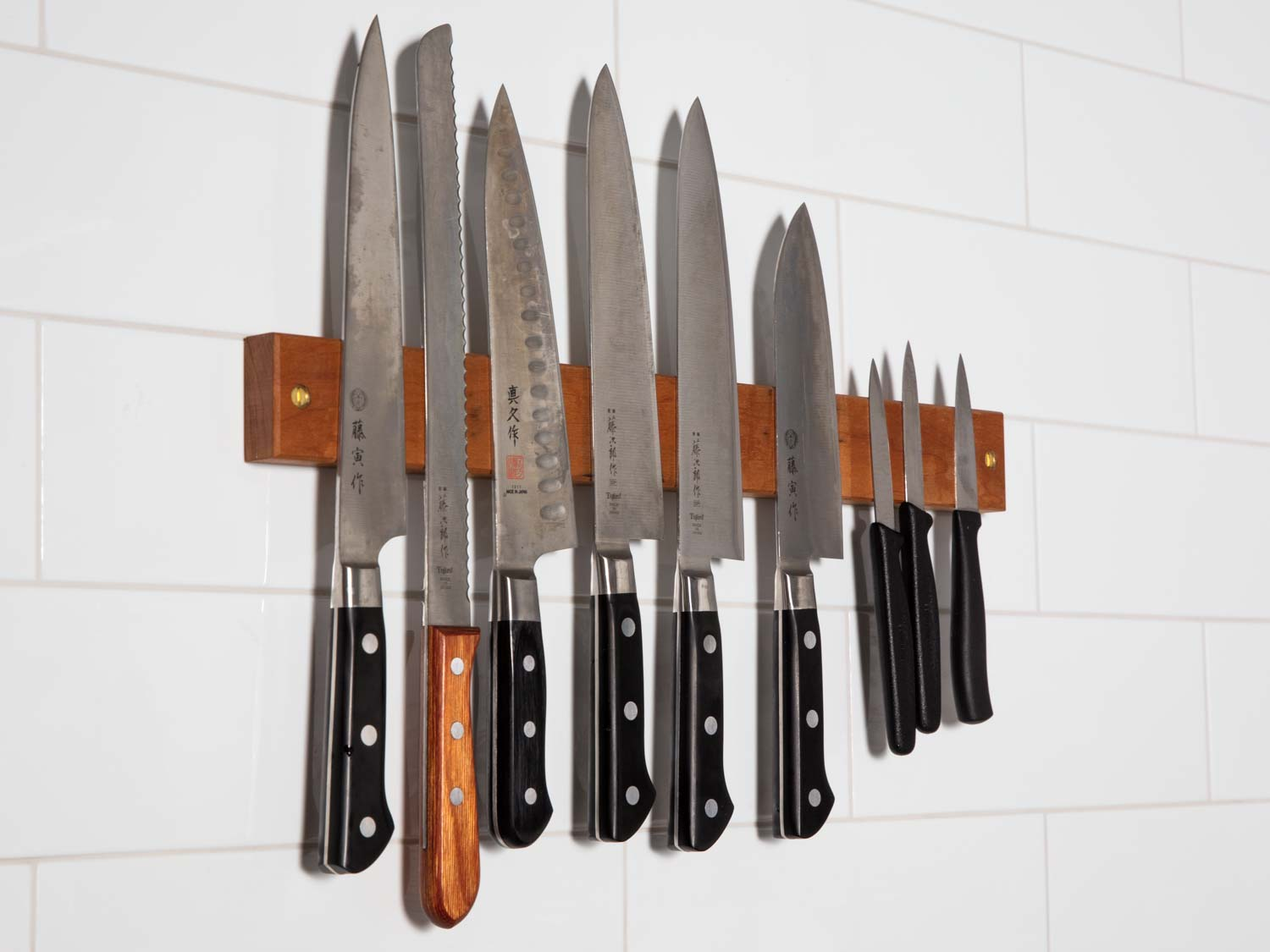
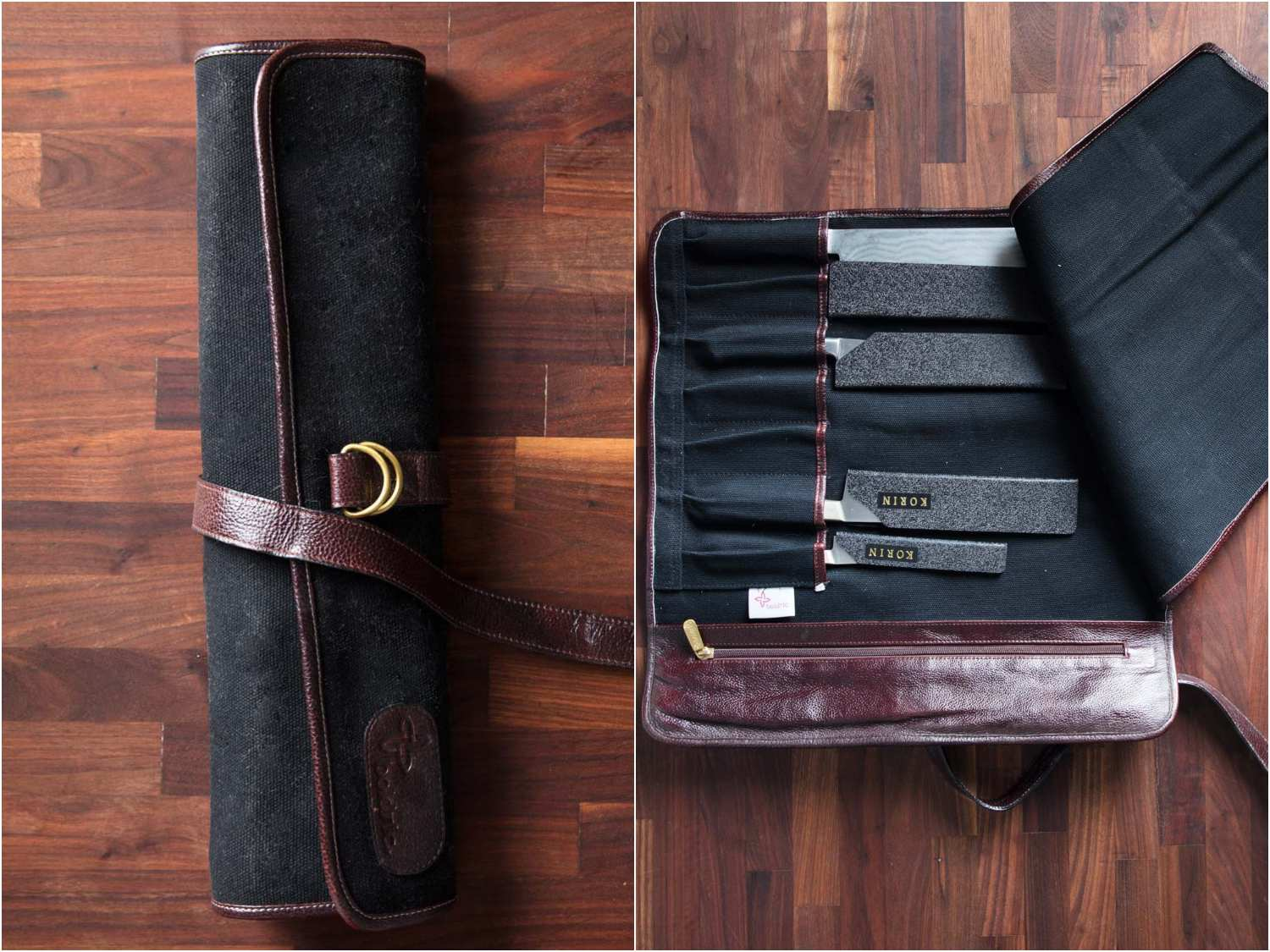
- Store your knives safely and properly. Though popular and convenient, we do not recommend traditional knife blocks. These take up a lot of counter space, tend to dull your knives, can collect hard to remove particles, and often encourage buyers to purchase more knives than they need. We much prefer a magnetic wall strip which saves space, offers easy access, is easy to clean, and doesn’t dull the blade. There are also some great in-drawer solutions that can protect your knives. If you need to frequently travel with your knives (like us), a nice bag or roll with a soft interior is great. Individual blade protectors can also be well worth getting, depending on how you store your knives.
Happy Holidays, and happy cooking!
